
A Shortage of People, Money, and Common Sense: IISS Has Assessed the Political and Economic Situation in the rf
5/28/2026
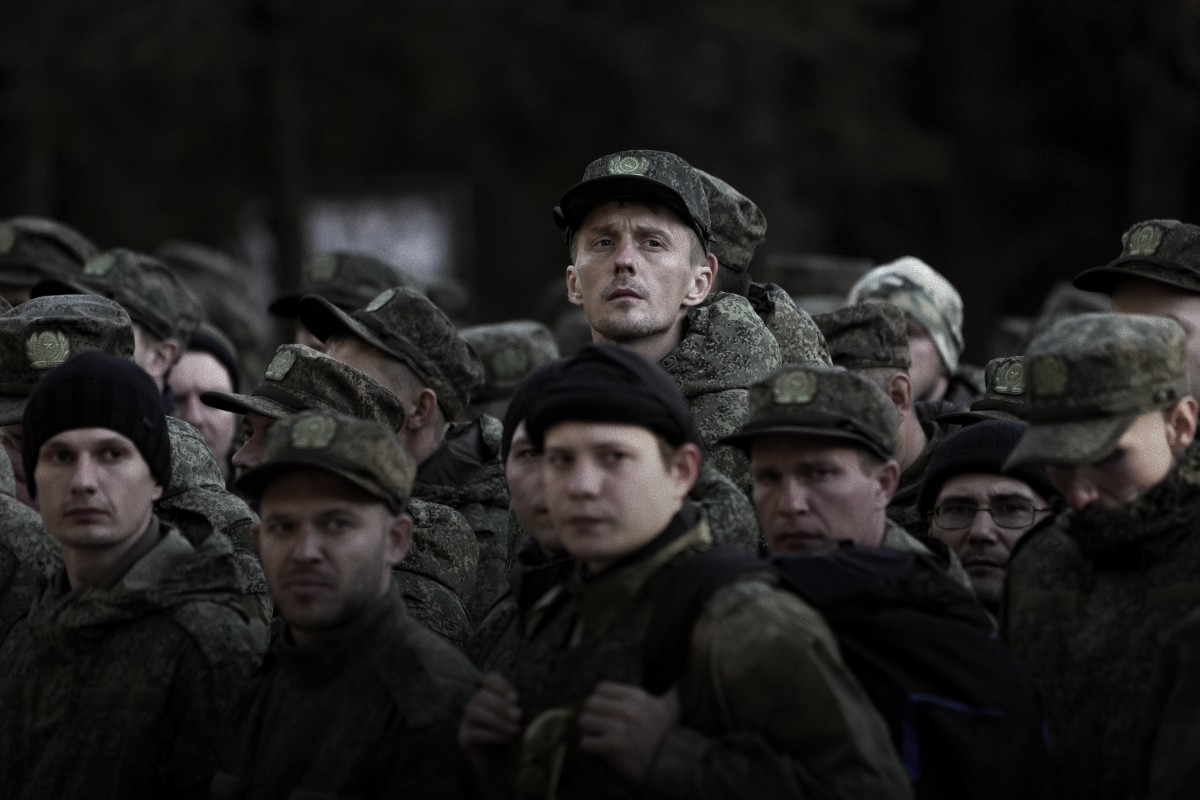
The International Institute for Strategic Studies (IISS) has published a report entitled “The Coming Crisis in Russia’s Political Economy”, which assesses russia’s military and economic resilience amid the ongoing war against Ukraine. The authors’ conclusions do not include a scenario of rapid collapse – instead, they point out a gradual accumulation of systemic imbalances that, over the coming year, will leave the kremlin facing a choice with no acceptable options.
The central diagnosis is that russia has come dangerously close to the limits of its internal capacity. Over the coming year, moscow will have to either intensify pressure on society through a new wave of mobilization or revise its ambitions regarding Ukraine. Both paths are dead ends. The first will accelerate the crisis; the second will mean admitting failure.
The labor shortage is one of the most acute problems. According to IISS estimates, the shortfall amounts to about 2.3 million workers. A significant portion of the working-age population is either mobilized, serving in the security forces, or working on the production line at a defense plant. The civilian economy has felt the full brunt of this.
The result is a “dual economy”. The defense industry receives orders and funding. Everything else stagnates. China partially fills the need for components and dual-use goods, Indian migrants cover the gaps on construction sites and in factories, and North Korea supplies ammunition. But none of these crutches resolves the fundamental problem: russia simply does not have enough people to wage war and function normally at the same time.
At this, Beijing is in no hurry to help moscow out of altruism. The Chinese supply critical imports on terms that are unfavorable to russia. Dependence is growing, but leverage is not.
The recruitment system based on high contract payments is running its course. The IISS points out that further increases in monetary incentives no longer yield the desired increase in new recruits. The armed forces of the rf are increasingly filled with people with addictions, criminal pasts, or serious health issues. The army takes everyone – and this is evident on the battlefield.
Under administrative pressure, russian banks are lending to defense industry enterprises. These loans are not evaluated by market criteria – the solvency of defense plants depends on government orders and the duration of the war, not on actual business performance. If the fiscal situation worsens, the banking system will face a blow for which it is unprepared. The kremlin’s response in such a case would be even more elements of a command economy.
To maintain the pace of weapons production, moscow is already resorting to soviet-era methods: the administrative assignment of civilian workers to specific defense enterprises. One can forget about the free choice of workplace. This is not a market economy, but an imitation of one imposed from above by the mobilization apparatus.
The combination of all these factors creates a dangerous mix. Inflation, unequal distribution of income between the defense and civilian sectors, decline in quality of life, and constant threat of a new mobilization – all of this is fueling social tension. The kremlin understands this and is responding in its usual way: expanding digital surveillance, restricting VPNs, tightening regulations on messaging apps, and building up tools for preemptive suppression.
The IISS’s conclusion is that the system may maintain the appearance of control for some time yet, but the price of this is increasingly harsh internal repression and ever-shrinking room for maneuver externally. A new open mobilization, if it occurs, will only accelerate all these processes simultaneously.