
Agent and Artist: Mykola Hluschenko and Vasyl Perebyinis in the Clutches of soviet Intelligence
9/7/2025
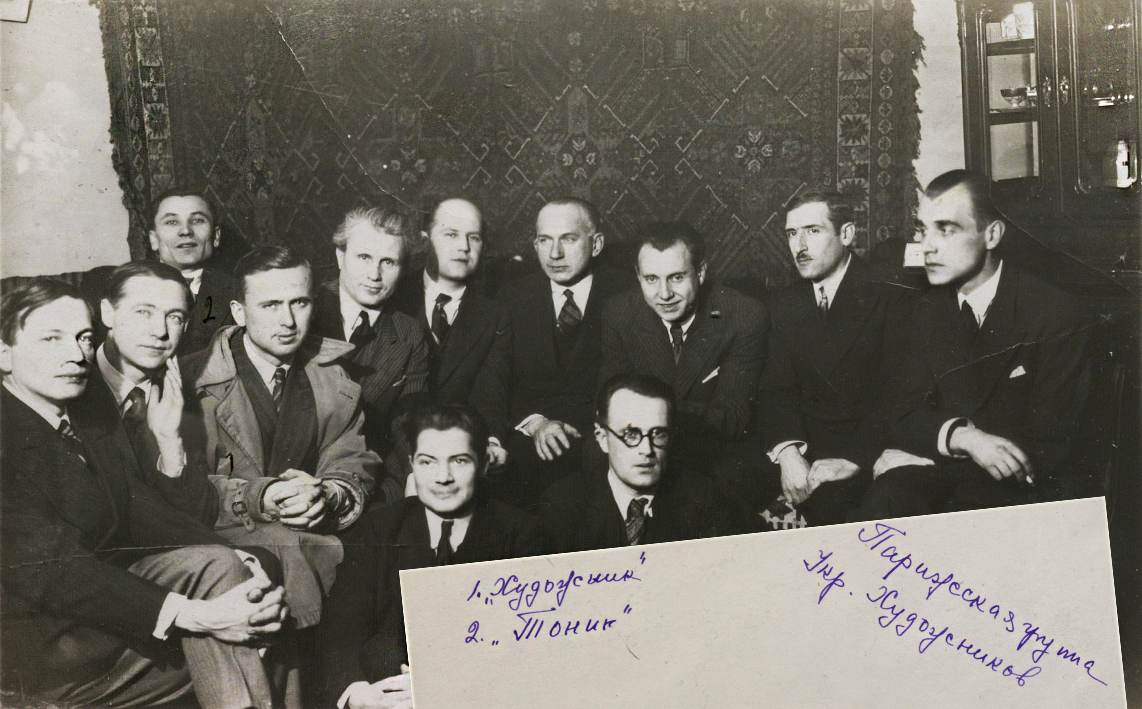
In the 1920s and 1930s, Paris became a center of Ukrainian emigration, where artists who rejected the Bolshevik regime worked alongside political figures. Among them was Mykola Hluschenko – a talented artist who later became a soviet intelligence agent under the code name “Yarema”. His official activity was to create portraits of French intellectuals, while his unofficial activity was to collect information about the Ukrainian émigré community.
In 1933, the chekists decided to find a replacement for Hluschenko, who wanted to return to the USSR. Their choice fell on Vasyl Perebyinis, an artist who had deep ties with the leaders of the Ukrainian People’s Republic and the Organization of Ukrainian Nationalists. After careful recruitment, Perebyinis agreed to cooperate, receiving the code name “Tonin”. His biography is a journey through wars, escapes, studies in Krakow and Paris, and eventually, life in exile.
Archival documents from the Foreign Intelligence Service of Ukraine show that Perebyinis provided only general information and did not become an active agent. In 1937, contact with him was lost. It was not until 1963 that he unexpectedly contacted Hluschenko from London, sending him letters. They contained memories, artistic plans, and a desire to send books and antiquities to the USSR. The KGB took an interest in him again, but having analyzed his monograph, which was saturated with nationalist motifs, decided not to renew informant ties. Perebyinis wrote about his ancestors who fought against imperial moscow, about his brothers who died for Ukraine’s independence, and about his personal persecution.
His work – more than 150 paintings, exhibitions in London, the USA, and Canada – remained unnoticed by the secret services, who saw him only as a source of information. In 1966, before a planned visit to Kyiv, he fell ill and died. The case was closed without any artistic assessment.
Today, the name of Vasyl Perebyinis is returning to Ukrainian cultural memory. His works are not just pieces of art, they are testimony to the difficult choice between creativity, freedom, and the pressure of a totalitarian system.