
Austria Is Preparing a Major Reform of Its Anti-Espionage Legislation
4/7/2026
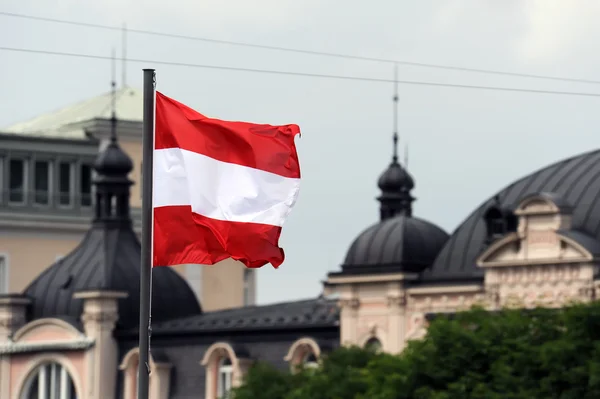
The Austrian government is preparing a reform of criminal legislation in the field of counter-espionage – one of the most comprehensive in recent decades. The Ministry of Justice has drafted a package of amendments aimed at closing legal loopholes that foreign intelligence services, primarily russian ones, have exploited with impunity within the country.
Current legislation criminalizes espionage only if it directly targets the Austrian state. This leaves a wide range of intelligence activities outside the scope of criminal prosecution: gathering information on OPEC, the IAEA, the OSCE, and UN agencies located in Vienna, as well as surveillance of foreign diplomats or opposition figures. Formally, such operations do not violate Austrian law, and this is precisely what has made Vienna a convenient base for the fsb and gru operations for decades.
The proposed changes significantly broaden the very definition of espionage. In particular, intelligence activities conducted on behalf of foreign intelligence services against the European Union and other international organizations operating on Austria’s territory will be subject to criminal liability. The concept of “harm to Austria’s interests” is also being redefined – from now on, it covers not only threats to state institutions but also any actions capable of harming the country’s security, international image, or economic well-being. For criminal prosecution, the mere possibility of such harm is enough, without the need to prove that it actually occurred.
A separate aspect of the reform is the criminalization of recruitment by foreign intelligence services and voluntary consent to such cooperation. This measure is aimed first of all at fighting the practice of recruiting so-called low-level agents – people recruited via social media to carry out auxiliary intelligence tasks. It is precisely such schemes that russian intelligence has been actively using in EU countries following the full-scale invasion of Ukraine.
In the medium term, the adoption of these changes will strengthen the capabilities of Austrian intelligence services to detect, prevent, and investigate espionage operations, particularly those targeting international organizations in Vienna. The Austrian initiative may serve as a catalyst for expanding counterintelligence tools at the EU level and systemically reducing the risks of russia’s hybrid influence on EU member states.