
Emergency Country: How russia Lost Control of Its Housing Stock
1/16/2026
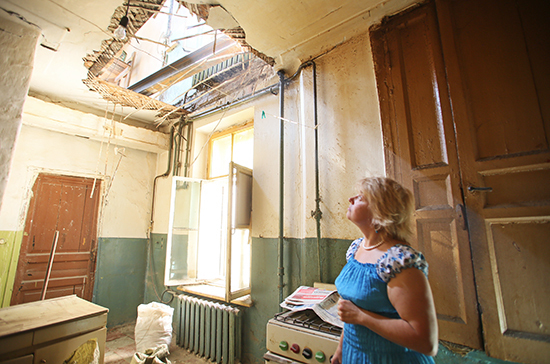
One in four apartment buildings in russia needs major repairs, and one in ten is already in a state of disrepair or is old – the scale of housing degradation is becoming systemic. According to official data, about 239,000 buildings are more than 40% worn out, thus being dangerous to use without immediate repairs. Another 9.3% of the housing stock – approximately 88,000 buildings – are classified as old or dilapidated, meaning they pose a direct threat of collapse or a constant risk to residents.
The worst situation is in the arctic and northern regions: in yakutia, the share of problematic housing reaches 46%, in arkhangelsk region – 31%, in komi and the yamalo-nenets autonomous okrug – 30% in each. It is there that the state has effectively left citizens on their own with the destruction of the housing infrastructure.
After the start of the full-scale war against Ukraine, the federal program for the resettlement of emergency housing was suspended due to lack of funds. The authorities openly admitted that they were unable to resolve the problem under the current circumstances: according to preliminary estimates by the ministry of finance, the elimination of the emergency housing stock would require about 2 trillion rubles, while the budget plans provide for 160 billion rubles for several years. Even the inclusion of the program in the national project “Infrastructure for Life” starting in 2025 did not save the situation – in 12 regions, it was effectively derailed due to a lack of funding and sharp price increases.
As of January 1, 2024, the emergency housing stock amounted to 23.1 million square meters, with an average of 2.7 million square meters being added each year. Instead of accelerating resettlement, at the end of 2025, the ministry of construction proposed postponing the implementation of the program until September 2028, partially shifting the financial burden onto the residents themselves and revising the criteria for emergency housing –effectively recognizing majority of the dangerous housing as suitable for living.
Against this background, the decline in the real estate market only highlights the overall crisis. In 2025, developers brought 41 million square meters of housing to the market, but the launch of new projects fell by 12%, which is significantly worse than in 2022. After the abolition of mass preferential mortgages, sales in the first half of the year fell by 26%, and the number of building permits – by 23%. The industry remains in a protracted crisis: almost 20% of apartments are being delivered late, tax pressure is increasing, loans remain expensive, and the state – as in the case with emergency housing – is once again retreating, leaving citizens to fend for themselves.