
From Forest Fires to Oil Spills: How russia Is Destroying the World’s Environmental Security
9/24/2025
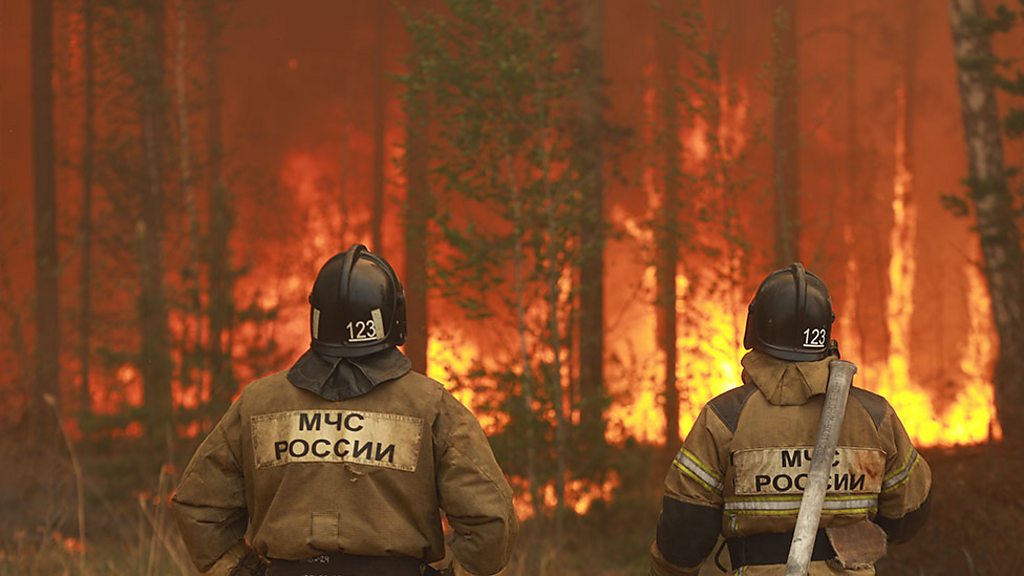
In russia, pollutant emissions have increased to 22,070 tons, wastewater discharges – by 3.1 %, and disturbed land has expanded by 9,700 hectares. The temperature has exceeded the norm by 1.21°C, while the area of coniferous forests has shrunk to 517.8 million hectares over the past nine years.
However, the scale of russia’s negative impact on the environment is much greater. In particular, the rf’s war against Ukraine had led to emissions of about 175 million tons of CO₂ in the first two years alone – equivalent, which is equal to Austria’s annual emissions, and more than 230 million tons in three years. Forest fires in Siberia and Yakutia in 2024 destroyed millions of hectares of forest, having turned them into a source of carbon.
The situation is exacerbated by man-made disasters: the spill of fuel oil from the tankers “Volgoneft-212” and “Volgoneft-239” in the Black Sea alone caused the spill of 3,700 tons of petroleum products, which resulted in the pollution of 200 km of coastline, the deaths of sea animals and birds, and poisoning of coastal ecosystems. russia’s “shadow fleet”, which transports 84 % of the cargo on the Northern Sea Route, poses a threat to the Arctic due to the lack of spill response infrastructure.
The rf’s climate policy remains one of the weakest in the world, with its goals assessed as “critically insufficient” and failing to meet the requirements of the Paris Climate Agreement. Moreover, the kremlin’s recent decrees allow for an increase in greenhouse gas emissions. This means that russia is not only neglecting its own environmental security, it speeds up global warming, which poses risks to all countries of the world – from droughts and floods to biodiversity loss and rising sea levels.
Thus, russia is increasingly emerging not only as a military aggressor, but also as a global environmental invader whose actions pose a threat to the future of all humanity.