
kirienko Has Lost Again: the fsb Has Taken Over “rossotrudnichestvo”
4/28/2026
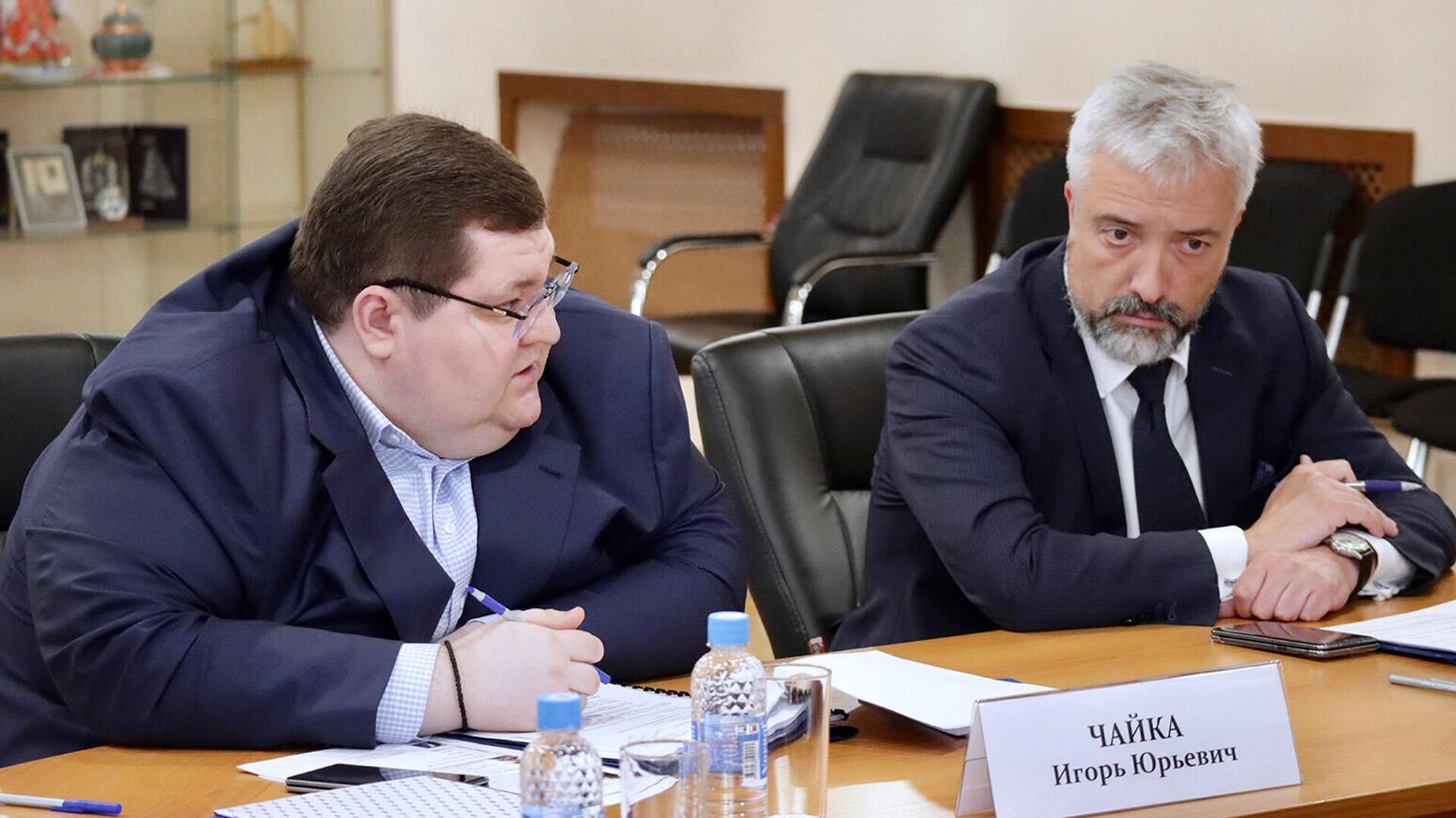
sergei kirienko’s string of failures has received yet another confirmation – this time on the international stage. On April 27, yevgeny primakov resigned as head of “rossotrudnichestvo” and was replaced by igor chaika. This is not a routine personnel rotation, but yet another episode of the presidential administration’s political bloc’s systemic losing to the siloviki, first of all the fsb.
primakov embodied the rf’s “soft power” model: work with diasporas, humanitarian programs, cultural diplomacy, and network influence through civil society organizations. It was through such instruments that the kremlin sought to compensate for the limitations of its direct political influence abroad. And it was precisely this model that was part of a broader framework overseen by sergei kirienko – the architect of technocratic policy management.
However, this framework began to falter. Failures in foreign policy, particularly in Moldova and Hungary, cast doubt on the effectiveness of such a political management system. The resources invested yielded no results, while political positions crucial to moscow were lost. In the kremlin’s internal logic, this means only one thing: a manager who fails to deliver results becomes a problem.
Against this background, primakov’s resignation appears to be a direct reflection of institutional failures. Formally, the talk is of “renewal” and “search for a new paradigm”, but in reality, this means an admission that the old approaches have failed. And crucially, these approaches were the product of the political bloc, not the siloviki.
The appointment of igor chaika only reinforces this conclusion. He is not a classic diplomat or political strategist. His background lies in business, management, and, crucially, close interaction with security agencies. The audits he has launched in conjunction with law enforcement agencies, along with the emphasis on control and efficiency through the use of force, indicate a shift in the very logic of the agency’s operations.
“rossotrudnichestvo” is effectively shifting from a zone of “soft influence” to that of coercive administration. This means that an instrument that was previously part of kirienko’s political model is now being integrated into the fsb’s orbit.
This process is not isolated. It fully mirrors what has already happened to the domestic digital sphere. The blocking of Telegram, attacks on VPNs, the promotion of state platforms, and the general offensive on the Internet were the result of recapturing the initiative by the security forces, in particular the fsb structures. Where the logic of a “managed environment” previously prevailed, the logic of “total control” is now being introduced.
Now, the same process is spreading to the external sphere.
Formally, the new construction provides for chaika’s work in conjunction with kirienko. But in reality, this means something else: the political bloc retains the façade of control, while the real tools go to the siloviki. This is a classic scheme of displacement, when responsibility remains, but the possibilities of influence disappear.
In this context, it is important to understand that the conflict between kirienko and the fsb is not personal but systemic. It is a struggle between two models of power. On the one hand, technocratic governance through political technologies, networks, and manipulation of the environment; on the other, force-based governance through control, coercion, and complete transparency for security services.
chaika’s appointment means that in this struggle, the power bloc has secured yet another victory.
The roles of other players only reinforce this trend. aleksei sedov is expanding control over the information and ideological space through his structures. dmitry medvedev is radicalizing political discourse, pushing the system toward tougher decisions. vyacheslav volodin is seen as a potential center of alternative political influence through parliament and the regions. All these processes are taking place in parallel with the weakening of kirienko’s role as the sole coordinator of domestic policy.
All in all, a coherent picture emerges. Failures abroad are undermining the political bloc’s standing. Domestic problems with governance mechanisms are fueling doubts about its effectiveness. Security agencies are exploiting this to expand their influence. And every new personnel reshuffle only reinforces this process.
primakov’s resignation and chaika’s appointment mark another step in dismantling the model built by kirienko, and at the same time represent the fsb’s another victory in the struggle for control over key policy areas.
kirienko is no longer the center of the system, but merely one of the players whose sphere of influence is rapidly shrinking.