
putin Has Turned the fsb into a State Within a State
4/3/2026
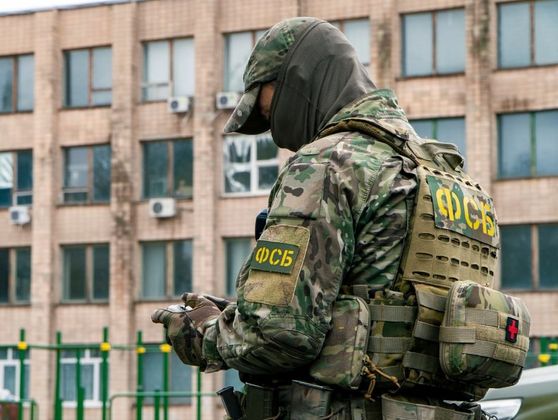
Starting April 1, the fsb can demand copies of any organization’s databases – including banks, corporations, and research institutions – without a court order. In the first quarter of 2026 alone, the agency’s powers were expanded at least five times – more than in 2024 and 2025 combined. russia no longer hides the fact that it has built a police state.
The fsb’s powers now cover virtually everything: science, finance, telecommunications, freedom of movement, and the physical detention of people.
Since February, the service has managed to cut off citizens’ communications and internet access at will, at its own discretion. In March, “white lists” of resources accessible when mobile internet is cut off went into effect in moscow: the fsb decides which websites are worthy of existing. The security service has already cut off the network in several districts of the capital. And this is presented as the norm. The fsb has also been granted the right to open its own detention centers. De facto, they have always existed: “lefortovo” and taganrog detention center No. 2, where Ukrainian prisoners are held, have never truly been outside the service’s control. Now, this lawlessness has simply been formalized on paper.
The information perimeter is shrinking on several fronts simultaneously. Research and educational institutions – both public and private – are required to submit research plans involving foreign nationals or foreign companies to a unified database. Critical infrastructure operators transmit data on cyberattacks to the fsb around the clock. The mandatory data retention period for platforms has been extended from one to three years – the volume of files on citizens is growing proportionally.
The agency has no intention of stopping there. The fsb is preparing to control the import and export of any surveillance devices and software, add specific gadgets to IMEI blacklists, and test russian artificial intelligence models for “sovereignty” – that is, their suitability for use against its own citizens.
Against the background of the current rampage, the year 2025 looks almost “mild” – universities were required to coordinate international contracts with the fsb, fines were introduced for searching for “knowingly extremist materials”, and banks were designated as “organizers of information dissemination” – meaning they were required to store and hand over customer correspondence. In 2024, the service was granted the right to participate in the selection of conscripts and to process military servicemen’s personal data without their consent.