
russia’s Light Aviation Flying Back to the soviet Past
4/21/2026
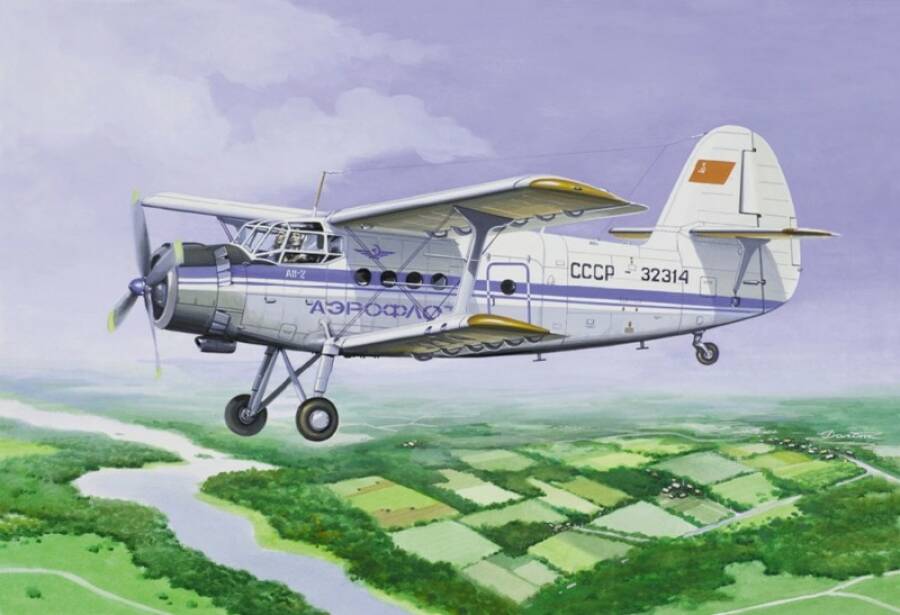
russia has decided to revive the “kukuruznik” (the colloquial name of the soviet agricultural aircraft, the An-2 biplane – Transl.). The siberian aviation research institute has proposed retrieving approximately 700 AN-2 aircraft from storage facilities to plug the catastrophic gap in the country’s light aviation sector. There are no alternatives left: sanctions have cut off access to new technology, both homegrown import-substitution projects have failed, and without air service, approximately 60% of the rf’s territory – the part where neither roads nor railways lead – is effectively cut off from the rest of the country.
The AN-2, designed back in the 1940s, carried the burden of small-scale aviation for decades, first in the ussr, and then in the rf. Over the years, more than 17,000 aircraft were assembled in several countries, including Ukraine, Poland, and China. Most have long since been decommissioned and scrapped. Today, only 249 aircraft remain in active service in russia, with another 276 registered with DOSAAF. Since 2024, the rf has halted the decommissioning of old aircraft and returned 16 units to the skies. Passenger safety does not factor into these calculations.
In parallel, there has been a series of failures with “modern” replacements. The “Baikal” aircraft, which was supposed to replace Ukrainian ANs in the rf’s fleet, has been continuously postponing certification since 2023 – first to 2025, then to 2026, and now there are hints of 2027. Technical and financial problems prevent a realistic date from being set. The second project – the TVS-2MS, a major upgrade of the same AN-2, developed without government funding and deemed a technical success – has been closed in russia. The Mongolian company MUNKH AERO will operate these aircraft domestically, but with American engines.
It is precisely the engines that are the main obstacle to reviving the 700 mothballed aircraft. There are two options – and both are dead ends. American engines are unavailable due to sanctions. The russian TVD-10B exists only on paper, while experts cautiously describe the prospects for its serial production – given the industry’s technical and financial exhaustion – as “rather vague”. It is worth noting separately: the project’s initiators claim that the fuselages of the old aircraft are only one-third worn out, but industry experts do not believe this figure.
If the “Baikal” is postponed again and the engine problem remains unresolved, residents of remote regions of the rf will face the very real prospect of reaching civilization only via environmentally friendly horse-drawn transport.