
russia’s Scientific Decline Has Hit Rock Bottom
4/17/2026
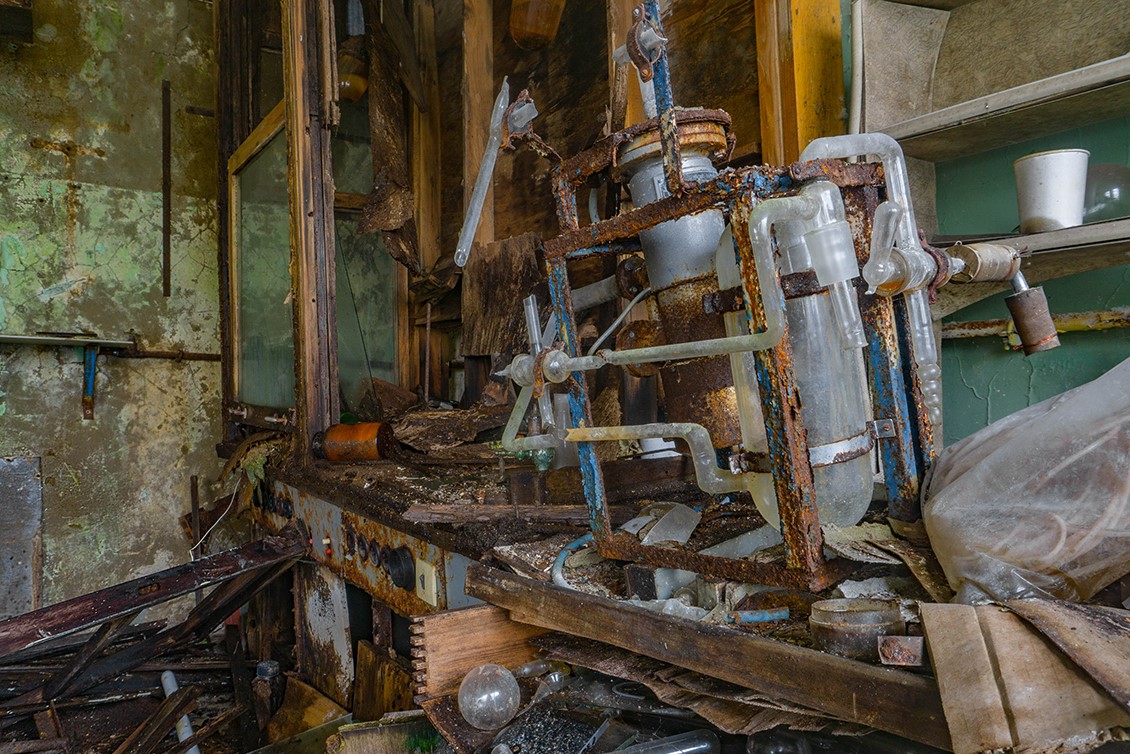
prime minister of the rf mikhail mishustin met with president of the russian academy of sciences gennady krasnikov and tasked the scientists with “doing everything necessary” to provide industry, economy, and social sector with cutting-edge innovations. putin emphasized his personal attention to the issue. One might expect scientists to respond enthusiastically to this call, if it were not for one detail: the state is systematically depriving them of any conditions necessary to do so.
The share of spending on civilian science in russia has fallen to a decade-low. While 0.58% of GDP was allocated to science in 2013, by 2021 the figure had dropped to 0.47%, and in 2024–2025 – to approximately 0.36%. This represents a 25% reduction from the already modest pre-war levels. Funding is provided according to the beloved soviet “residual principle”, compounded by travel bans, restrictions on international cooperation, difficulties accessing modern equipment, and internet censorship.
The deterioration of the resource base is particularly evident in the space industry. russia’s lunar program was supposed to begin with the launch of the Luna-25 station back in 2019, but “ballistic reasons” postponed the launch to 2021, while the actual launch took place in 2023 – and the spacecraft crashed. Then head of “roscosmos” yury borisov announced subsequent launches for 2027 and 2028. The current schedule is as follows: Luna-29 in 2032, Luna-30 – in 2034, and Luna-28 – circa 2036. That said, this is not set in stone. While technical progress stalls, samara region has decided to support the “space spirit” of russians in an accessible way by announcing a poster contest titled “Let’s Go to Space!” to mark the 65th anniversary of the first human spaceflight.
It is telling that the state’s attitude to science has found support in society as well. According to sociological surveys, 58% of russians consider scientific knowledge “non-essential” in everyday life, while only 35% believe it is necessary. The gap between these two groups is steadily growing. The country that was once the first to send a human into space, now, by a majority vote, considers science superfluous. It seems that in the rf, the government and the public have finally reached a consensus.