
The Decline in Production Is No Longer the kremlin’s Only Problem
8/13/2026
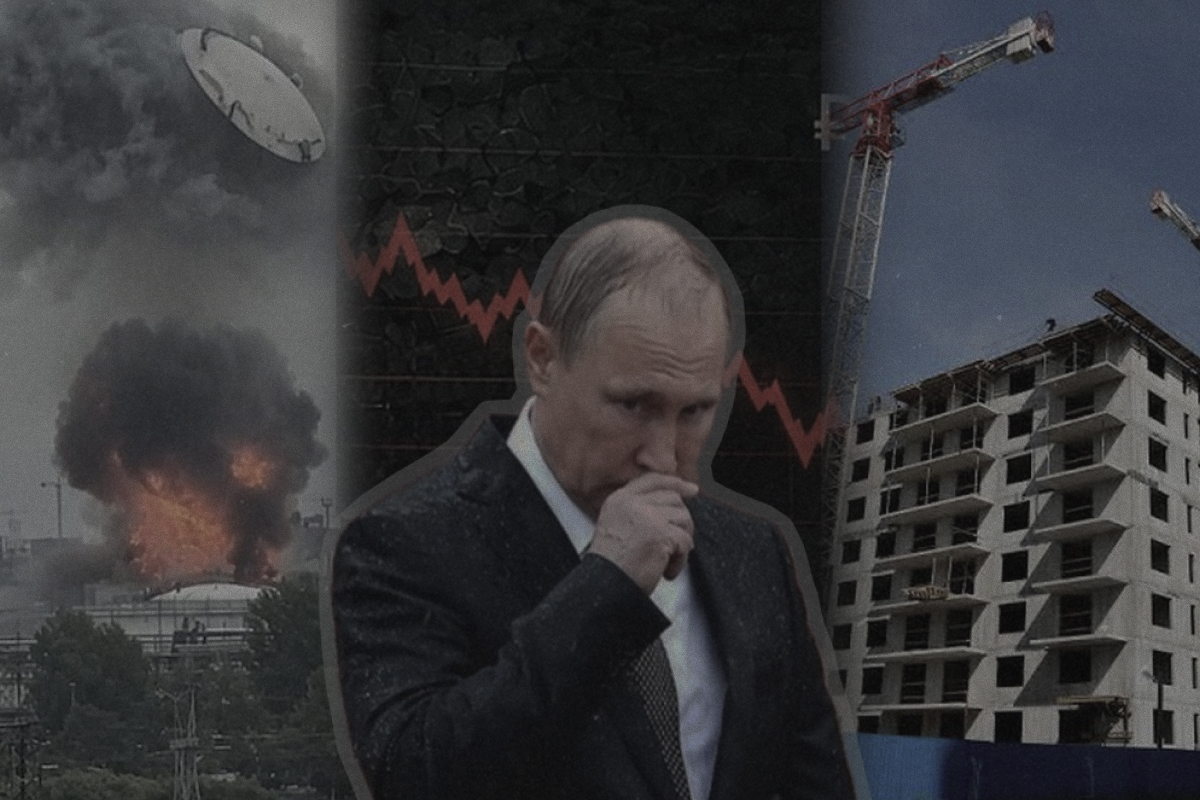
In July 2026, russia’s economy showed a further deterioration in financial activity. The hardest-hit sectors were the extractive industry, petroleum product manufacturing, and public administration. But the problem is no longer limited to export-oriented raw materials – domestic demand and investment are also weakening.
Revenues fell the most in export-oriented industries. In the extraction of oil, gas, and other minerals, they were by 9.3% lower than the second-quarter average. In August, the pressure will intensify as payments for June exports are due – for the period when global prices for oil, metals, and mineral fertilizers were declining.
At the same time, domestic demand is weakening. In trade, financial services, insurance, real estate, telecommunications, and other sectors focused on the domestic market, revenues grew by only 1.5%, compared to 6.9% in the second quarter. Financial services, insurance, and real estate provided some support. Agriculture and telecommunications, on the other hand, saw a decline in payments.
Sectors dependent on government funding suffered an even sharper decline. In July, their revenues fell by 15.4% following a 12.6% decline in the second quarter. The largest decline was in public administration.
Investment activity is also declining. Payments in construction, machine building, equipment manufacturing, and scientific research fell by 2.1%. The sharpest declines were recorded in electronics, machinery and equipment manufacturing, transportation equipment manufacturing, and specialized construction.
Demand within production chains is also weakening. Revenues from intermediate demand – goods and services that enterprises use in their own production – decreased by 0.9%. The main negative contributions came from agriculture and oil and gas extraction.
Problems are already evident in most regions. Excluding extraction and public administration, declines were recorded in the northwestern district (1.5%), the southern district (14.1%), the north caucasus district (4.9%), and the siberian district (3.2%). At this, the extractive sector shrank in virtually all federal districts. The resource-based model, which for years provided russia’s economy with its main source of revenue, is beginning to falter across the country.