
The First Desert Has Already Appeared: russia Is Rapidly Losing Fertile Territories
6/1/2026
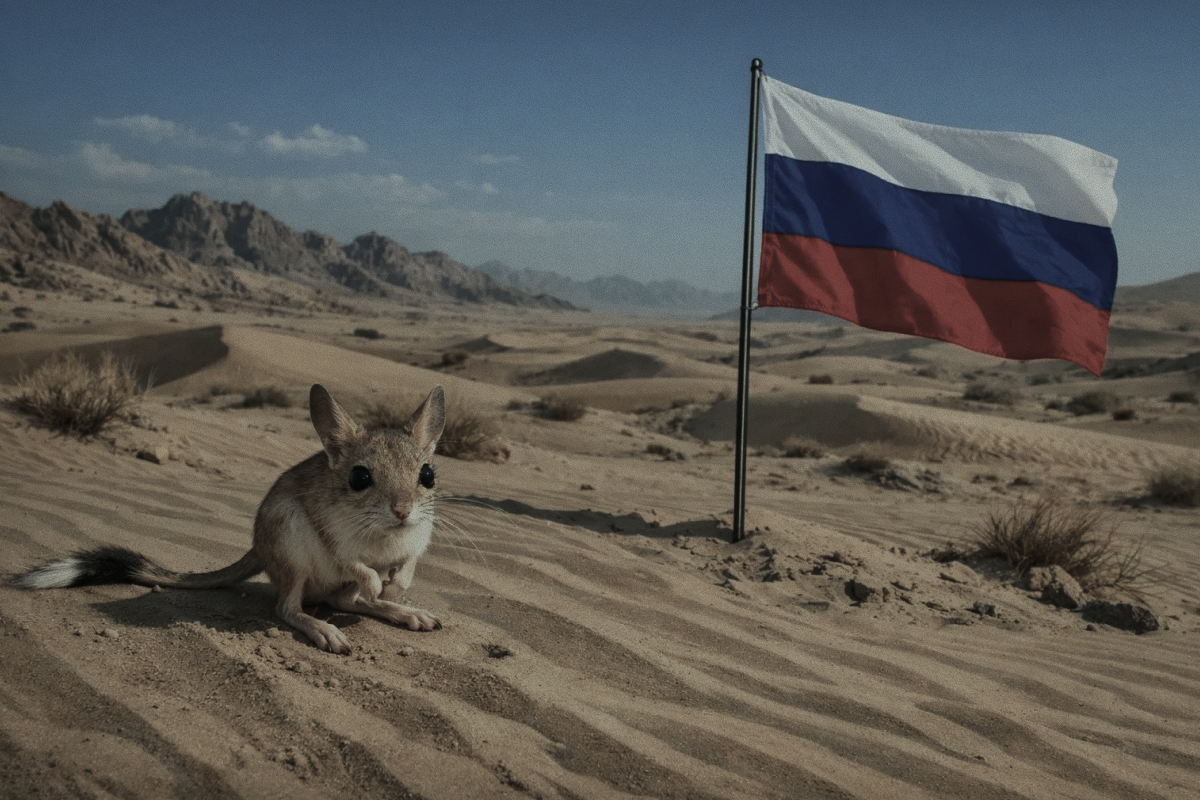
While the kremlin continues to tout the country’s “boundless resources” and agricultural might, russian scientists are sounding the alarm over the rapid degradation of the country’s soils and the accelerating loss of value of its agricultural land.
According to official data, 1.5 to 2 million hectares of land degrade in russia annually. This leads to a loss of nearly 4 million tons of agricultural production in grain equivalent. Losses from soil erosion alone can reach 25 billion rubles per year.
The situation is so critical that even representatives of russia’s scientific elite openly acknowledge the problem. Academician of the russian academy of sciences andrei ivanov has stated that “there is no such thing as ‘excess land’”, and that soil desertification now affects not only traditionally arid regions but also the permafrost territories of tuva and yakutia.
In total, about 84 million hectares of land are at risk of desertification. The worst situation is observed in dagestan, astrakhan region, the kuban, and rostov region. In kalmykia, the first true desert on the territory of modern russia has already effectively formed, stretching across 3.2 million hectares of land.
Equally alarming is the loss of humus – the foundation of soil fertility. According to experts, over the past century, much of russia’s arable land (the legendary black soils included) has lost 30% to 50% of its original organic matter reserves. This means a gradual decline in crop yields and rising costs to sustain agricultural production.
Climate change is an additional blow. A review of droughts in 2024 documented worsening arid conditions in most of the country’s natural zones. In the future, this will force farmers to spend increasingly more on fertilizers, irrigation, soil reclamation, and risk insurance.
It is telling that discussions have already begun in russia about the need to officially recognize the depreciation of land assets. Scientists propose testing soils for loss of fertility and reducing the book value of land in financial statements depending on soil condition.
Thus, one of russia’s key resources, which for decades was considered an unquestionable advantage of the state, is gradually turning into a source of economic risks. And while the kremlin spends resources on geopolitical adventures, russia is quietly losing what is essential for both food security and stable economic development.