
The kremlin Plans to Finally “Resolve the belarusian Issue” Through the Migration of russians
3/27/2026
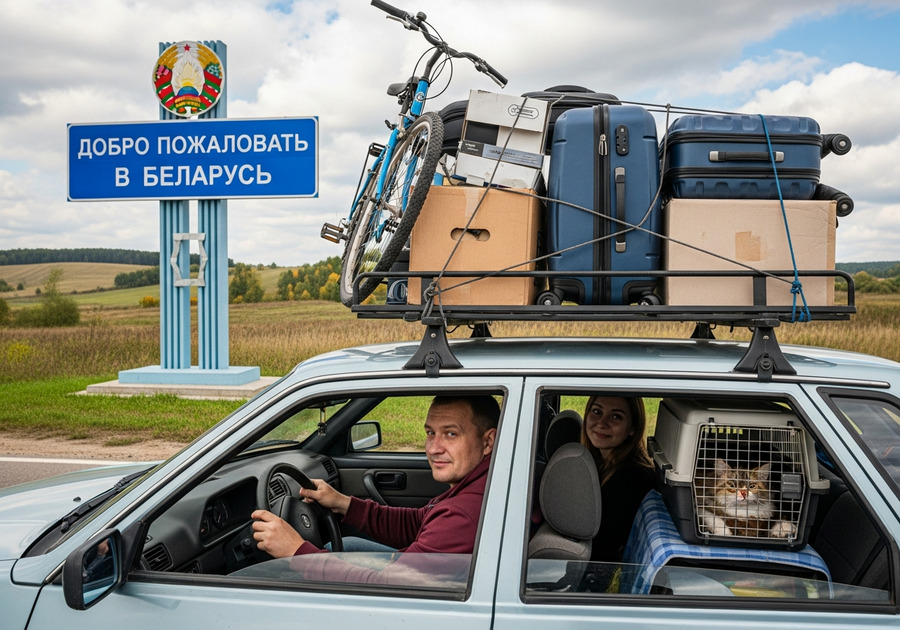
Since the start of russia’s full-scale invasion of Ukraine, approximately 90% of the migration flow to belarus has consisted of russian citizens. moscow is actively creating the conditions for loyal citizens to move to the rb – and is doing that systemically, with an eye toward the future. We are talking about moderate members of russian society, not pro-putin activists. It is they who have a chance to successfully assimilate in a foreign but non-hostile territory and, if necessary, become a critical mass of the “indigenous russian population in belarus” – the one that will require protection due to the need to learn the belarusian language. The scenario is familiar, and so are the tools.
russia cannot officially and forcibly, as was done in the ussr, simply take and resettle part of its population to a neighboring country – the rb formally remains an independent and sovereign state. Therefore, a different path has been chosen: in the rf, unacceptable living conditions are being artificially created for moderate russians who are ready to move but do not plan to emigrate to distant foreign countries. The mechanism is simple: the state consistently and methodically makes life unbearable for liberals, leaving them no choice but to leave. But this departure is controlled and directed in a direction convenient for moscow.
On March 24, the state duma passed, in its second and third readings, a draft law imposing up to three years’ imprisonment for denying the genocide of the soviet people. Human rights activists have already called it “the latest in a series of absurd measures”. The document fits perfectly well into the broader pattern of pressure being exerted on liberal citizens. There is no such people, no such country, and no such system. But criminal liability – that will exist. Even a mere suggestion made during a discussion about certain historical events could be interpreted by the repressive apparatus of modern russia as grounds for a criminal case.
In parallel, powerful migration triggers include internet and social media blockades, punishment for “fake news” against the invading army and the policies of modern russia, the lack of choice in elections, and other consistently undemocratic processes. In belarus, all of this is not felt so sharply so far. But just so far. So, recently, the rb has been actively promoted on social media to liberal russians as a new place of residence. Something like the Baltic republics during the soviet era – relatively free, relatively familiar, and close enough not to feel like an emigrant.
With a single move, moscow is globally resolving two problems: it is getting rid of “still somewhat thinking” citizens and is methodically cementing its influence over belarus for the future.