
The kremlin Pressuring Small Businesses As the War Needs Money
5/30/2026
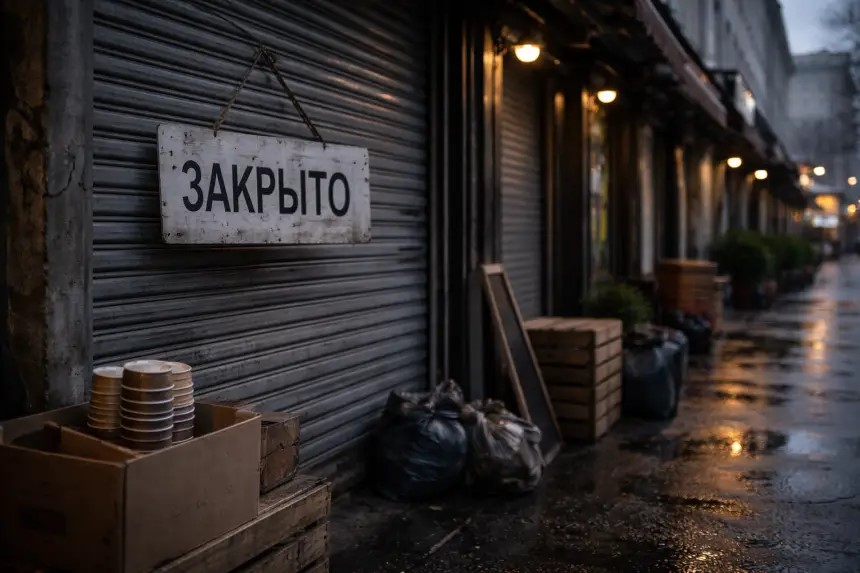
The kremlin has launched a new crackdown. The target is small business funds, which the federal treasury needs because financing the war is becoming more difficult with each passing month. The federal tax service of the rf is systematically closing every loophole that entrepreneurs used to protect their money from the state.
Businesses are fleeing the new rules en masse. One survival strategy involves a fictitious closure followed by re-registration as a sole proprietor, which allowed them to reset the annual income limit to zero and retain preferential tax treatment. The mechanism worked until recently: in the first quarter of 2026 alone, over 278,000 new sole proprietorships were registered in the rf, while 236,000 were liquidated.
The authorities responded: starting in 2025, entrepreneurs under the simplified tax system were required to pay VAT if their annual income exceeds 60 million rubles ($845,000). But that turned out to be insufficient – starting in 2026, the threshold dropped sharply to 20 million rubles ($282,000), and hundreds of thousands of small entrepreneurs who had previously flown under the radar fell under the new rules.
The “closed-reopened” scheme no longer works. The ministry of finance of the rf and the tax service have announced that an entrepreneur’s income will be aggregated for the entire year regardless of the number of re-registrations. If tax authorities prove that the re-registration was intended to evade taxes, they will assess additional VAT, interest, and a fine of up to 40% of the underpaid amount.
They’re even keeping tabs on money transfers. The tax agency, in cooperation with the central bank of the rf, is developing an algorithm to automatically track undeclared income through banking transactions. The focus is on regular transfers, a large number of counterparties, similar types of payments, and receipts from different regions. According to estimates, the system will become operational in 2027 and will generate at least $657 million in additional revenue for the budget each year.
But the logic behind this fiscal aggression is not simply the fight against the shadow economy. It is, above all, a search for any domestic funds in a situation where the war is depleting the treasury, loans remain exorbitantly expensive, and economic activity is slowing down. Small businesses are the most convenient target in this situation: not so influential as the resource giants, yet numerous enough to yield a substantial sum.
The result may turn out to be the opposite of what is expected. Increased fiscal pressure encourages a shift to cash, concealment of turnover, and curtailment of official business activity. The kremlin is tightening the noose and suffocating the very thing that is still somehow keeping the economy afloat.