
Trans-Caspian Drift: moscow Is Becoming a “Third Wheel” in Its Own “Backyard”
4/29/2026
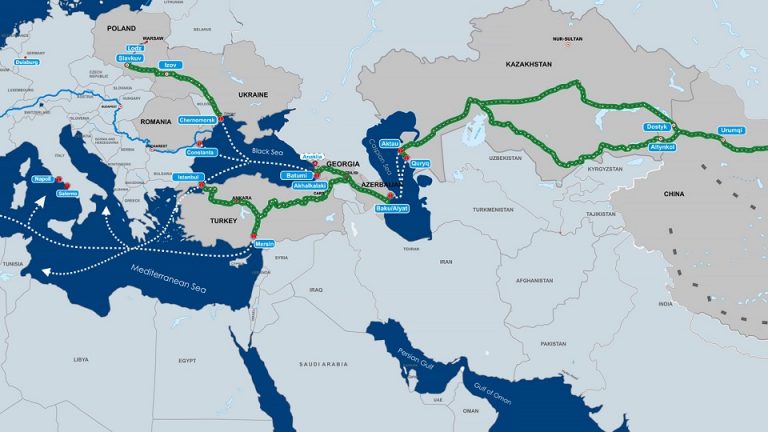
In April of this year, representatives of the Organization of Turkic States – Azerbaijan, Kazakhstan, Kyrgyzstan, Türkiye, and Uzbekistan – formalized what had long been discussed in the region: moscow is no longer a guarantor of stability. The parties agreed to rely solely on their own resources.
In parallel, the Trans-Caspian transport route is gaining momentum, methodically stripping russia of its status as a key transit hub between Asia and Europe. Once this corridor is fully operational, russia’s transport infrastructure will become a relic of the past that no one needs, along with the kremlin’s very presence in the region.
Armenia served as a telling culmination of this process. The outcomes of the latest summit between Yerevan and moscow confirmed that Armenians no longer view russia as either a strategic partner or a guarantor of their own security. Yerevan is consistently turning toward Türkiye – a more stable and predictable player.
The kremlin reacted as usual: it reached for its levers of pressure. The first attempt was a threat to raise gas prices. The response turned out to be unexpectedly harsh – Armenian Parliament Speaker Alen Simonyan publicly promised to initiate the procedure for the country’s withdrawal from the CSTO and the EAEU. The threat did not work.
At that point, the kremlin strategists turned to another tool – one as absurd as it was telling. “rosalkogoltabakkontrol” revoked the license of the main distributor of Armenian cognacs on the russian market – the proshan cognac factory. moscow actually deprived its own citizens of access to one of the world’s most famous alcohol brands. In response, Armenia merely accelerated its rapprochement with countries in the region, and first and foremost with Türkiye.