
In Kazakhstan, russian Narratives About the “Glorious” soviet Past Have Been Shattered by Historical Memory
10/28/2026
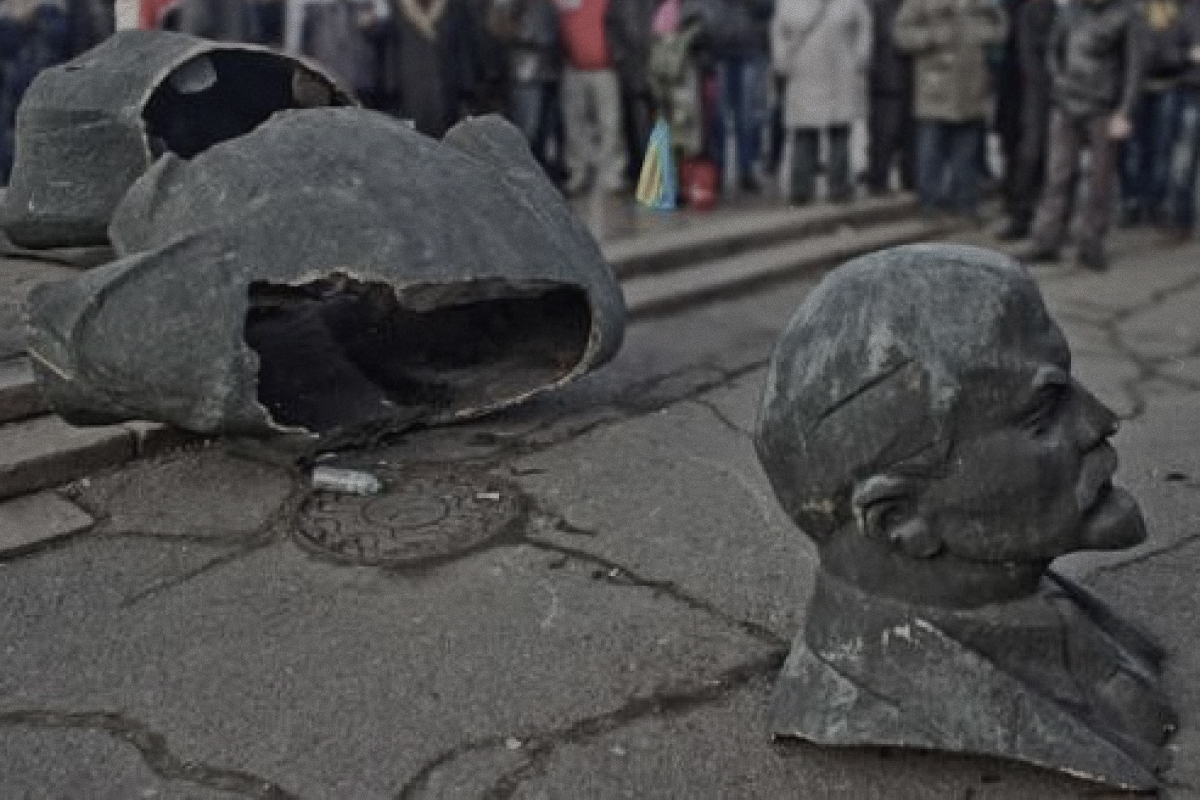
Desovietization has gained momentum in Kazakhstan. In the village of Kushmurun in Kostanay region, a monument to lenin has been dismantled at the request of the regional akimat. This decision was not spontaneous: attempts to remove the soviet symbol from the central square were made as early as 2015 and 2022, but supporters of the ussr defended the statue at the time. This year, regional authorities finally put an end to the matter.
The removal took place at the request of local residents, who collected nearly 400 signatures in support of this decision. The initiative group explains its position by stating that the soviet regime is directly linked to the Holodomor and political repression. The number of victims during the “asharshylik” (the mass famine in Kazakhstan in the early 1930s) reaches, according to different estimates, up to 2.3 million people – nearly half of the country’s population at the time. Experts refer to those events as the “Kazakh Holodomor”, similar to the Holodomor in Ukraine.
The seemingly insignificant event of the demolition of a lenin monument in a remote Kazakh village has seriously unsettled russian political strategists. Equating the Kazakh and Ukrainian tragedies, combined with other elements of desovietization, completely undermines russian narratives about a “happy soviet past”, particularly for the former republics of the ussr.
russia positions itself at all international levels as the legal successor to the soviet union. At the same time, the reexamination of the national histories of each state that emerged after the collapse of the ussr – with all their catastrophes and misfortunes – undermines the mythologization of the soviet era. According to this new logic, it becomes evident that entire republics were forcibly held under moscow’s oppressive rule. Consequently, russia, which sees itself as the successor to the ussr, must bear responsibility.
Recently, the processes of desovietization have intensified throughout Central Asia, although they take on distinct characteristics in each country. For example, in Kyrgyzstan this year, there have been calls for complete decommunization and derussification. Uzbekistan is generally considered the leader in these processes in the region. Tajikistan emphasizes the strengthening of national identity and historical self-awareness. Turkmenistan is following its own path toward building national sovereignty within the framework of an isolationist-neutral model.
Despite the differences in approach, all processes of desovietization (decommunization and derussification) in the countries of Central Asia are aimed at a single goal – to reduce dependence on and influence from russia.