
lukashenko No Longer Trusts His Government on Religious Affairs
7/30/2026
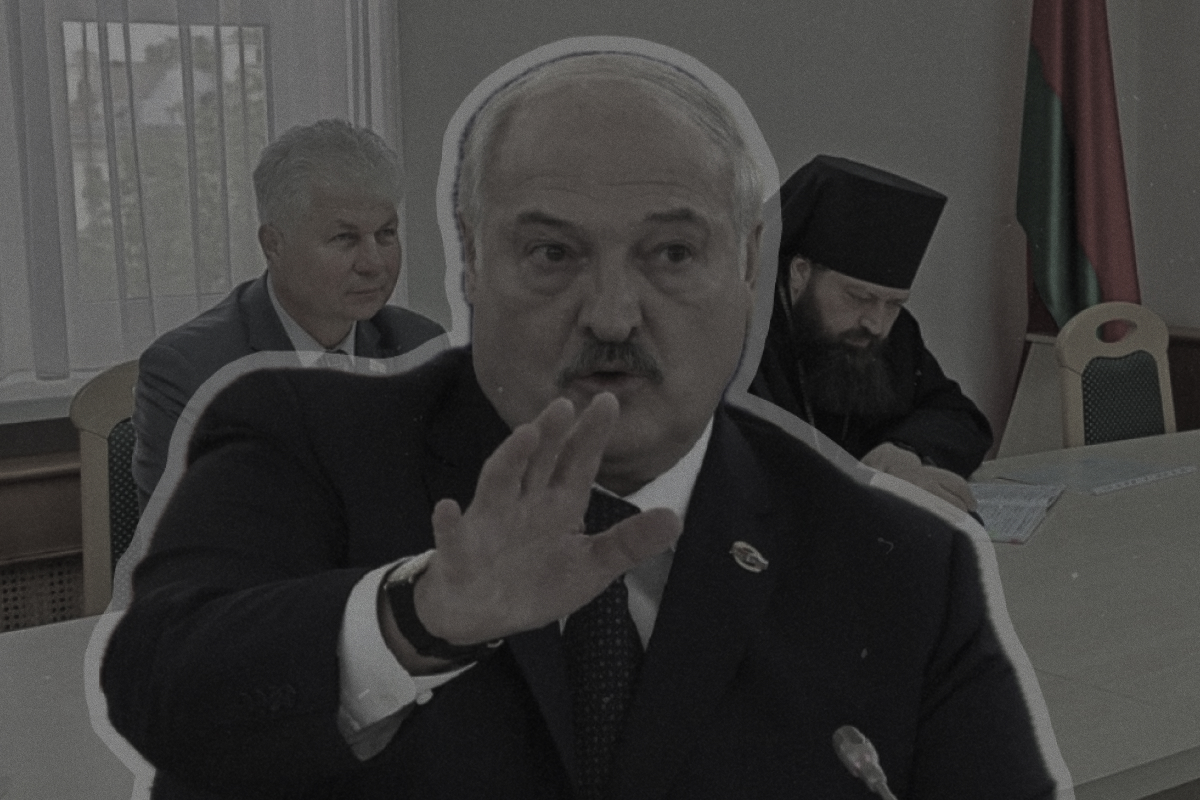
Starting August 2, belarus’ commissioner for religious and ethnic affairs will report directly to lukashenko, rather than to the government. Formally, this is merely a change in the administrative structure. But in reality, the regime is bringing the religious sphere under the direct control of the presidential administration.
State media explain this move as necessary to speed up decision-making on interfaith projects and legislative initiatives. However, behind this rhetoric there lies different goal: to tighten control over the country’s largest organized communities that are not entirely dependent on the authorities.
Churches remain among the few institutions in belarus that have their own networks, authority among the people, and connections beyond the country’s borders. Catholic, Protestant, and some Orthodox communities do not look solely to the minsk hierarchy. For many believers, their spiritual authority is not tied to lukashenko or the state system.
This is precisely what poses a problem for the regime. The authorities try to leave no room for the emergence of independent centers of influence, especially in the context of potential internal crises. Placing the commissioner directly under lukashenko’s authority allows for quicker intervention in the work of religious organizations and keeps them under political oversight.
There is also a contingency plan in case of a crisis involving lukashenko himself. If a power struggle arises or he loses the ability to govern, churches could theoretically become a channel for public mobilization or support for another political center. The regime is trying to eliminate this risk in advance by filling key positions with people who are personally dependent on the current authorities.
For the religious organizations themselves, this is unlikely to change anything. It does not grant them more freedom or ease the pressure on them. The commissioner will continue to serve not as a defender of believers’ rights, but as a watchdog ensuring that churches do not stray beyond the boundaries set by the regime.