
One Million Tons in Storage Tanks and Zero in Strategic Reserves: belarus’ Oil Paradox
6/25/2026
lukashenko has been boasting about energy independence for years. But in reality, this whole construct rests on one simple fact: belarus produces three times more petroleum products than it consumes.
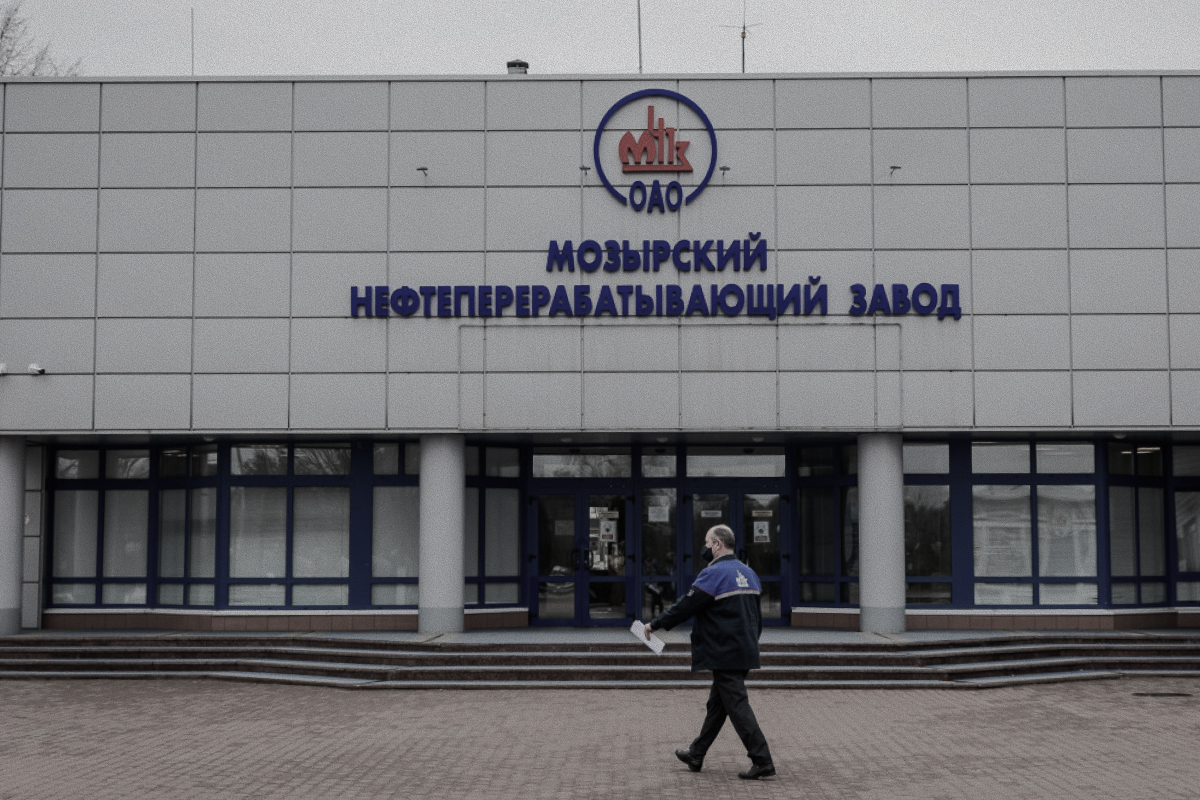
The mozyr oil refinery and the novopolotsk “naftan” together process about 15 million tons of crude oil per year. The domestic market consumes only 4.125 million tons, which is slightly more than a quarter of the industry’s capacity. The rest is exported. This surplus is precisely why shutting down even one of the two refineries is unlikely to cause queues at filling stations. The second refinery is physically capable of meeting all of the country’s domestic needs and would still have spare capacity, since neither facility is currently operating at full capacity.
There is, however, one weak spot. The mozyr refinery is a monopoly in the production of premium petrol: it produces over 80% of AI-95 and all of the AI-98. If it were to shut down – rather than “naftan” – the range of products on the market would narrow.
The storage tank network is a separate issue. “gomeltransneft druzhba” maintains storage facilities in mozyr and polotsk with a total capacity of over 1.1 million cubic meters – equivalent to about 900,000–950,000 tons of crude oil. Additional 250,000 tons of finished fuel are distributed across “belorusneft”’s warehouses. In total, this amounts to approximately 1.15–1.2 million tons of buffer stock. For context: back in 2019, during the scandal involving contaminated russian oil, 1.3 million tons were recorded in the storage tanks – and that was before further capacity expansion.
However, the system’s main vulnerability has nothing to do with the population’s fuel security. Petroleum products are one of belarus’ largest sources of foreign exchange earnings. Shutting down the refinery means a sharp drop in exports. And in belarus, a decline in the oil industry’s export profits has a specific consequence: petrol prices rise domestically. This cause-and-effect relationship has been observed repeatedly – and this year’s price hikes at filling stations are attributed to the same mechanism.
As for the russian dimension of this story: the crude oil processed by the mozyr and “naftan” refineries is russian. russia supplies the raw material, belarus refines it and sells the finished petroleum products to foreign markets, and the proceeds are shared between them – through subsidies, discounts, and intergovernmental agreements, which the kremlin uses as a tool to keep minsk in line with its policies. Any disruption in belarusian oil refining automatically means that a portion of the russian raw materials simply cannot find a refiner and, consequently, cannot be converted into foreign currency.
For russia, which is already struggling under the weight of sanctions and war, this is not an abstract threat. moscow has already lost a significant portion of its traditional markets for petroleum products – and the belarusian corridor remains one of the few relatively stable channels. The reduction in refining capacity in belarus directly impacts this channel: less refining – less belarusian export – less demand for russian oil – less foreign currency for russia.
The issue of strategic reserves has been raised on paper on numerous occasions. In 2021, “belneftekhim” proposed requiring wholesale suppliers to maintain a one-month supply of fuel. It wasn’t adopted… lukashenko had issued similar directives back in early 2020 amid the oil dispute with moscow. Nothing came of that either…
So, the picture is this: belarus is fairly well protected from a fuel crisis, at least in the short term. But any serious blow to oil refining will immediately affect minsk’s state budget and, with a slight delay, moscow’s foreign exchange earnings. The kremlin has built a system in which belarusian oil refining serves russia’s interests. Now this dependence has become mutual – and vulnerable on both sides.