
russia Has Lost Its Ability to Maintain Its Previous Pace of Recruitment for the War
7/13/2026
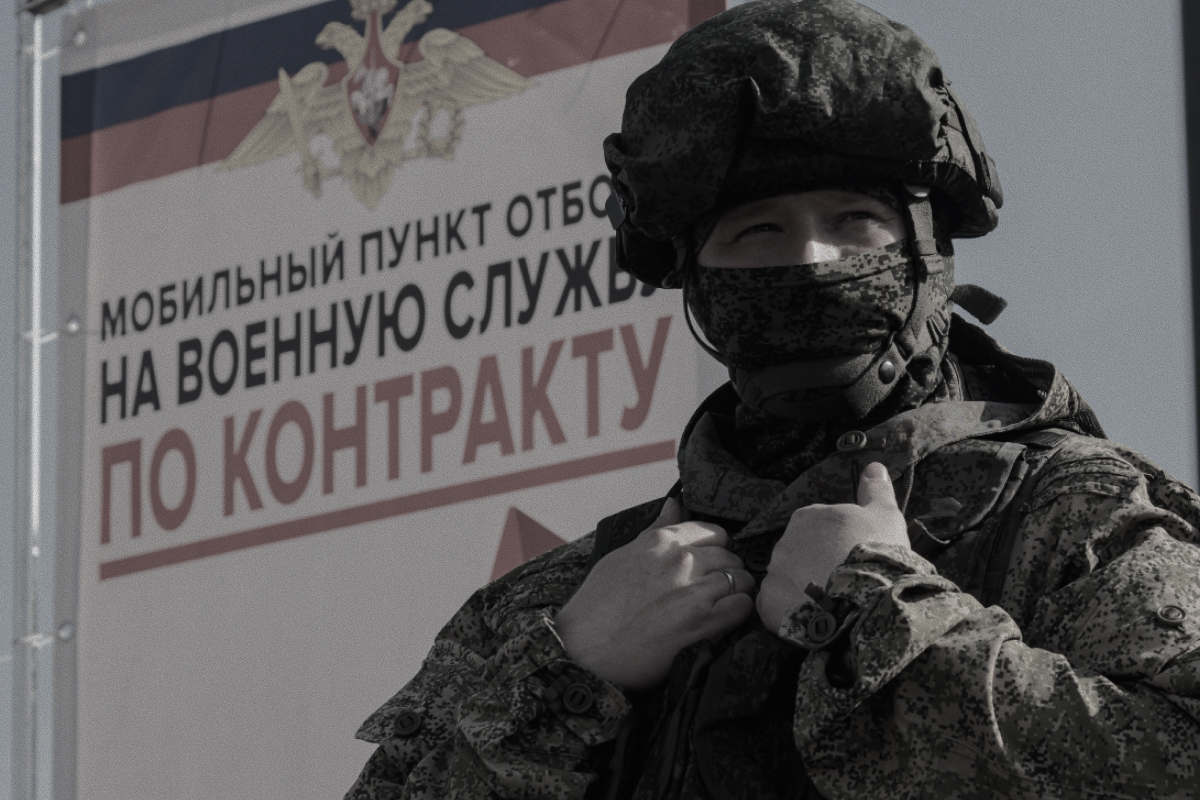
The Foreign Intelligence Service of Ukraine has noted a number of distinctive peculiarities of this year’s campaign to recruit contract soldiers for the armed forces of the rf to participate in combat operations against Ukraine.
The first peculiarity is the shortfall in meeting the annual recruitment target of 409,000 people.
As of early July, less than 50% of the recruitment plan had been fulfilled. Approximately 195,000 people have been recruited, compared to the planned 204,500. The current average daily recruitment rate (1,070–1,090 people) is insufficient to meet 100% of the plan. This is the biggest difference between this year’s campaign and those of 2025 and 2024, when an average of about 1,200 people were enlisted daily.
The second peculiarity is the relaxation in the requirements (medical and functional) for candidates. The goal is to expand the pool of potential recruits and reduce the time needed to register them and deploy them to the rf armed forces’ frontline units. The russian side’s need for such measures is driven by its mounting battlefield losses. In the first half of the year, total personnel losses reached approximately 196,700, of whom 115,300 – killed in action, 80,400 – medically evacuated, and about 1,000 – taken prisoner of war. Consequently, the number of contract soldiers selected for the armed forces of the rf is effectively comparable to the number of losses.
The third peculiarity is the high recruitment targets for members of russia’s smaller ethnic groups, as well as contracting residents of the temporarily occupied territories of Ukraine, which constitutes a violation of international law.
For example, in 2026, the rf plans to recruit approximately 7,900 residents of Ukraine’s temporarily occupied territories to participate in combat operations against Ukraine. At the same time, within russia, the greatest burden (in terms of numbers) of meeting the 2025 and 2026 targets falls on the central and volga federal districts (92,000 and 90,000 people, respectively). At this, in the volga federal district, the highest recruitment targets are set for the republics of bashkortostan and tatarstan (12,900 and 12,000 people, respectively). This reveals the kremlin’s true attitude to indigenous peoples of the rf and residents of the “new” regions, whom it views as expendable resources for carrying out its aggressive plans.
The fourth peculiarity is contracting students. The ministry of defense, together with the ministry of education of the rf, has planned to recruit more than 50,000 students from institutions of higher and secondary vocational education into military service under contract. Despite unprecedented propaganda and administrative pressure, the overwhelming majority of students do not express a desire to enlist in military service and participate in combat operations against Ukraine. Recruitment figures for this category fall far short of targets: only one in 400 students agrees to serve. russia’s young people do not want to fight.
The fifth peculiarity is an increase from 16,000 to 18,500 in the number of foreigners planned to be contracted to participate in combat operations against Ukraine. To carry out this task, recruitment agencies are actively involved; they typically arrange for mercenaries to enter the rf under the status of labor migrants. At this, moscow has not stopped this recruitment despite protests from foreign partners. Potential candidates are often lured with promises of high-paying jobs in russia, but upon arrival, they are informed that they have personally signed a contract with the ministry of defense of the rf.
russia’s migration service and certain russian law enforcement agencies widely use blackmail and intimidation against migrant workers (mostly from Central Asian countries), forcing them to sign contracts with the ministry of defense of the rf. Sometimes the incentive is the opportunity to obtain russian citizenship through a simplified procedure after a certain period of contract military service in the rf armed forces. Thus, this group is viewed by the kremlin as an important resource for replenishing battlefield losses.
Conclusion: This year’s situation indicates a decline in the putin regime’s ability to maintain recruitment rates at the levels seen in previous periods.