
The Ambrosetti Forum Identified New Risks for Europe
9/9/2026
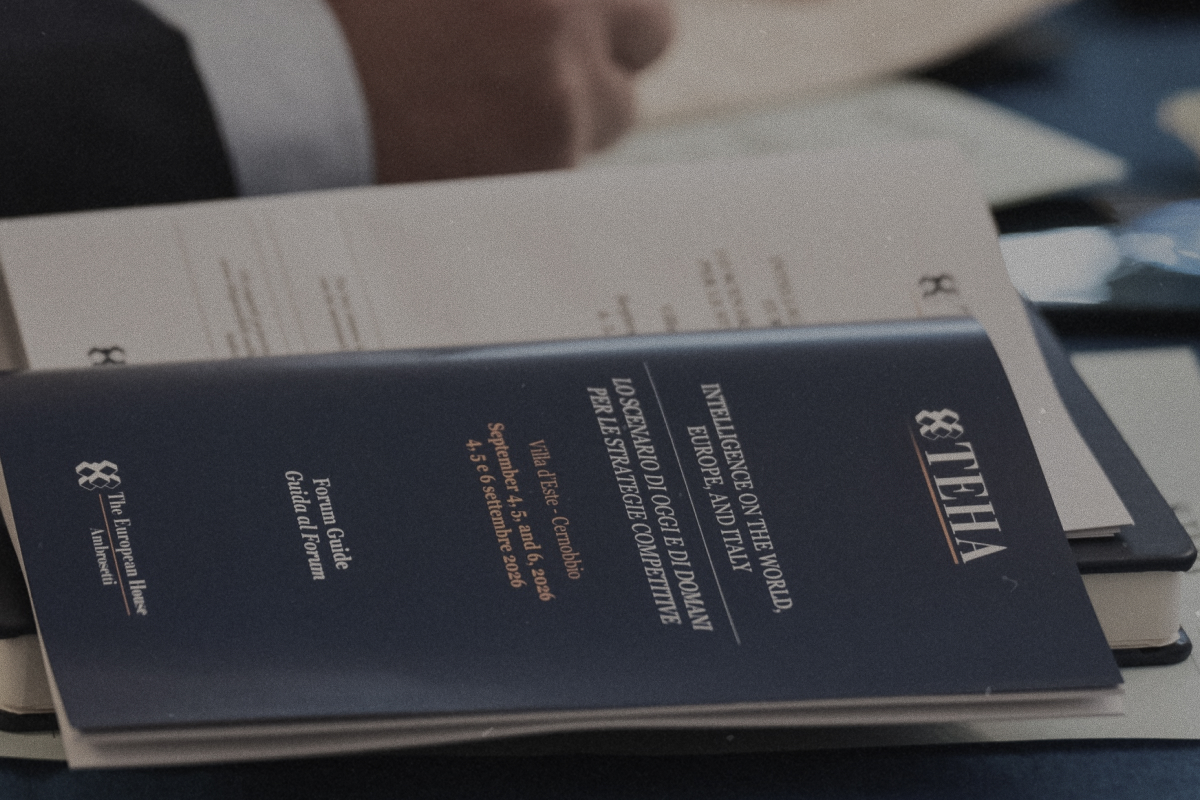
The 52nd Ambrosetti International Economic Forum, organized by the think tank The European House – Ambrosetti, took place in Cernobbio, in the province of Como, Italy. This year’s theme was “Current and Future Scenarios for Competitive Strategies”. Participants discussed geopolitical, economic, technological, and social changes, as well as their impact on states and businesses.
The Forum has been held annually since 1975 and is one of the key platforms for informal dialogue among European policymakers, international organizations, the business community, the financial sector, and experts.
Among the participants were Deputy Prime Minister and Minister of Foreign Affairs of Italy A. Tajani, President of the European Council A. Costa, Prime Ministers of Croatia A. Plenković and of Albania E. Rama, Minister of Foreign Affairs of Portugal P. Rangel, Deputy Minister of Foreign Affairs of Türkiye Z. L. Gümrükçü, US Senators J. Barrasso and K. Gillibrand and US Permanent Representative to NATO M. Whitaker.
The Forum opened with President of Italy S. Mattarella’s written address on the crisis of the international order. He stated that the world is undergoing a transitional period: the former system of balances is weakening, while new rules have not yet taken shape. Under these circumstances, the struggle for resources, the politics of power, and the desire of individual states to ensure their own security at the expense of others are intensifying.
During a discussion on European challenges, Minister of Foreign Affairs of Italy A. Tajani emphasized the importance of preserving the transatlantic partnership. According to him, Europe and the United States remain interdependent amid economic competition with China, the struggle for raw materials, and the need to strengthen their presence in Africa. Speaking about russia, Tajani pointed out an escalation in moscow’s aggressive actions against Western nations. He specifically highlighted the rise of hybrid threats and did not rule out attempts to interfere in electoral processes in EU countries.
President of the European Council A. Cošta stated that the future membership of Ukraine, Moldova, and the Western Balkan countries could strengthen the European Union. In his view, enlargement has the potential to reinforce the EU as a geopolitical actor capable of influencing issues of peace, security, and economic development.