
The kremlin Is Preparing Not to Win the Elections, but to Stage a Victory
7/2/2026
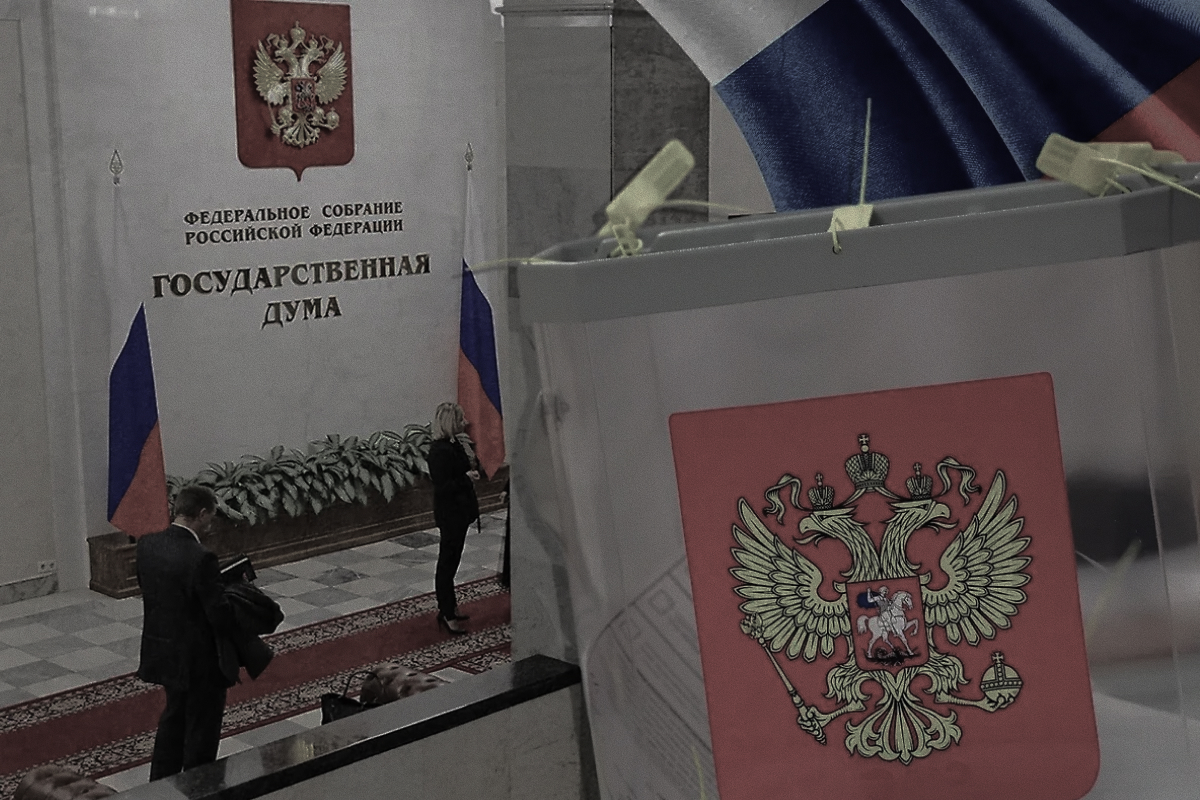
“united russia” has officially launched its campaign ahead of the state duma elections scheduled for September 18–20. The first stage of the party’s 23rd congress took place in moscow, bringing together nearly 4,000 delegates and guests: representatives of regional branches, regional governors, government officials, MPs, senators, and participants in the war against Ukraine.
The main organizational outcome was the approval of candidates and party lists. The federal portion of the list was presented by party leader d. medvedev. It included minister of foreign affairs s. lavrov, mayor of moscow s. sobyanin, military correspondent e. poddubny, the rf’s presidential commissioner for children’s rights m. lvova-belova, and the head of “yunarmiya” v. golovin.
According to russian experts themselves, the composition of the list is purely symbolic: lavrov embodies confrontation with the West; sobyanin represents the administrative resources of major cities; poddubny – the military-propaganda segment; lvova-belova – the social and humanitarian sphere; and golovin – militarized youth policy and the integration of war veterans into the party hierarchy.
The convention’s campaign messages are centered on personal loyalty to putin and support for the invasion of Ukraine. The most telling slogan was “Supporting putin is the bare minimum”. Alongside it were “russia cannot be defeated on the battlefield”, “Our fighters are the true elite of russia”, and “Victory in our war is a prerequisite for the security of the motherland”.
However, behind the facade of party consolidation lies an electoral picture that is troubling for the kremlin. According to the “vtsiom”’s latest data from June 26, support for “united russia” has fallen to 33.8% - down by 1.7% over the week. Meanwhile, “new people” is polling at 12%, the communist party of the rf (kprf) – at 10.7%, and the liberal democratic party of russia (ldpr) – at 9.4%. The trend is clear: the ruling party is slowly but steadily losing voters.
The congress adopted a two-stage campaign model. The first stage involves finalizing the list of candidates and defining the party’s platform. The second stage, scheduled for August 22, is set to conclude with the adoption of a new “people’s program” – a document designed to mobilize voters with socioeconomic promises as the campaign nears its end.
In the russian media, the convention is directly linked to a reduction in the kremlin’s expected targets. This indicates that the authorities no longer expect a maximum result and are trying to ensure a controlled and sufficiently plausible outcome. The tools are predictable: administrative resources, personalizing the campaign around putin, war rhetoric, and social promises. The kremlin is preparing not to win the elections, but to simulate a victory.