
The Orthodox Archdiocese of Paris Is Preparing to Elect Bishops Without moscow’s Permission
6/25/2026
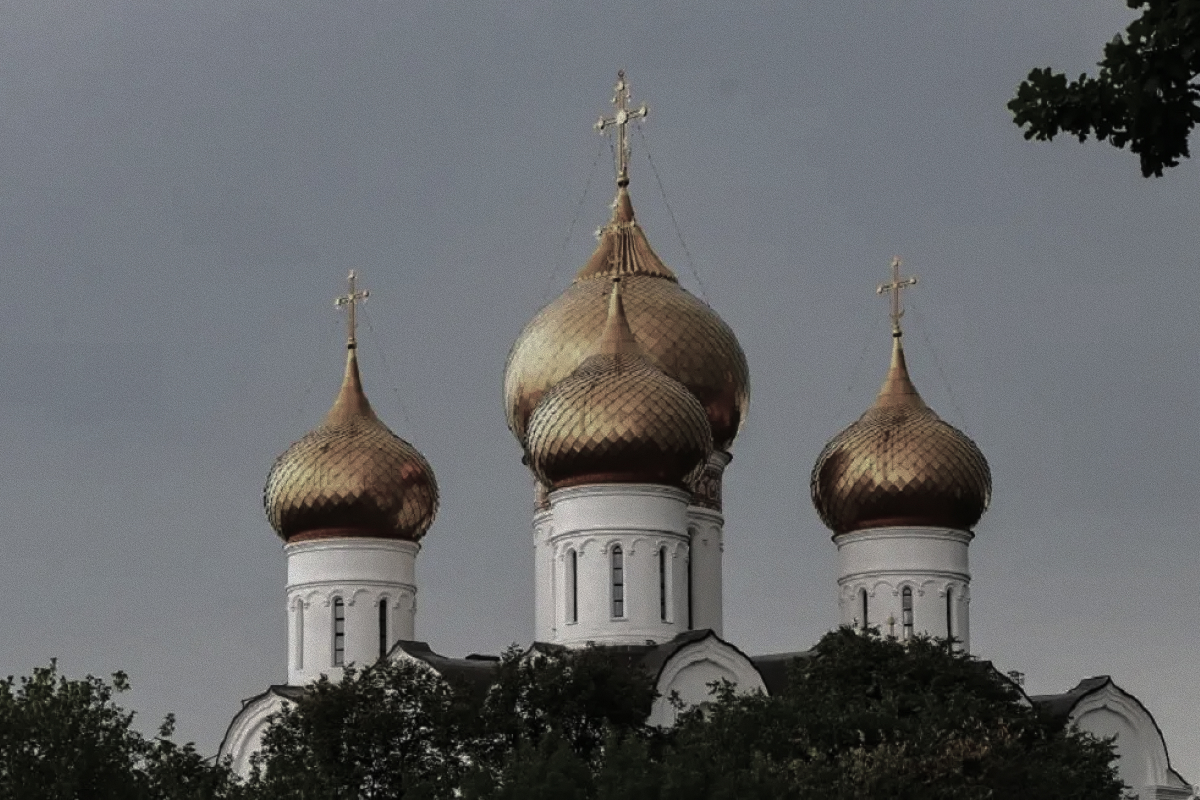
On June 26–27, a diocesan assembly of the Archdiocese of Orthodox Churches of the russian Tradition in Western Europe will be held in Paris, at which the clergy may vote to elect auxiliary bishops without the approval by the moscow patriarchate. The initiative was launched by Archbishop John of Dubna (Jean Renneteau), who stated explicitly in a letter to the clergy: moscow has been ignoring the Archdiocese’s requests for clergy appointments for three years, and it is impossible to wait any longer.
The Archdiocese unites 60–80 parishes in seven European countries and traces its history back to Paris in the early 1920s, when Metropolitan Eulogius (Georgiyevsky) led the first wave of russian church emigration. For a long time, the structure was under the omophorion of Constantinople, but in 2019 it transferred to the moscow patriarchate. Some parishes refused to recognize this decision at the time.
The problem is specific. In 2023, the leadership of the Archdiocese submitted to patriarch kirill three candidates for the positions of auxiliary bishops. moscow responded to only one: on December 14, 2025, the appointment of Hegumen Augustine (Macbeth) for Great Britain and Scandinavia was effectively approved. Despite numerous reminders, the moscow patriarchate has yet to decide the fate of Archimandrite Victor (Crețu) and Archpriest Anatole Negruță.
In his address, Archbishop John described the Archdiocese’s situation as “very fragile”. While parishes in France, Germany, and Italy are growing, the current number of bishops is insufficient to ensure full pastoral care in all countries. moscow’s obstruction of personnel appointments directly undermines the functioning of parishes.
As an argument in favor of independent elections, the Archdiocese’s leadership cites the examples of Estonia and Latvia, where similar decisions were made without full approval from the russian orthodox church but did not lead to an immediate canonical break. Archbishop John also directly raised the question of kirill’s intentions: in his view, the patriarchate’s three-year silence effectively nullifies the personnel mechanism outlined in the 2019 “Letter”, on the basis of which the Archdiocese joined the structure of the moscow patriarchate.
Analysts point to a telling dynamic. Some parishes supported the transition to moscow in 2019 with the expectation of preserving internal autonomy. The current crisis demonstrates that real control over administrative decisions remains in moscow. If the diocesan assembly supports independent elections of bishops, this could serve as a model for de facto autonomy without a formal break from the russian orthodox church, and as a guide for other European parishes that have long been dissatisfied with how the moscow see is turning church governance into an instrument of political influence.