The War Party Is Sinking Like a Rock: Support for “united russia” Is Plummeting
6/23/2026
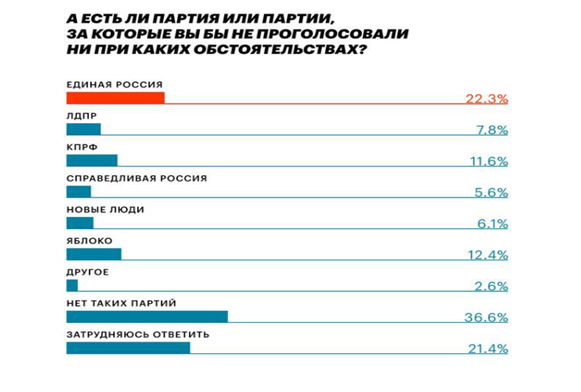
russians “have begun to catch on” – putin’s “united russia” party has topped not the trust rating, but the hatred rating. According to a poll, 22.3% of russians said they would not vote for putin’s party under any circumstances in September – this is the highest disapproval rating among all political forces in the aggressor country.
While the kremlin is waging war against Ukraine, the economy is working for the front lines, and living standards are falling, support for “united russia” continues to dwindle. Within just half a year, its approval rating has plummeted by nearly a third – from 23% to 16%.
The kremlin is well aware of this trend. That is precisely why the authorities’ main strategy today is not to persuade voters, but to ensure they do not show up to vote at all. Lower turnout means fewer problems for the ruling party. Political strategists call this “drying out”: the campaign must be as boring, inconspicuous, and meaningless as possible.
It is telling that, against the background of falling support, “united russia” is increasingly trying to distance itself from its own decisions. Party representatives have already begun publicly denying their key role in introducing internet censorship and blocking numerous websites. They claim that the restrictive laws were allegedly passed with the support of various political forces. However, it was the “united russia” MPs who authored or co-authored many high-profile initiatives – from the “sovereign internet” law to restrictions on VPN services, tighter control over IT companies, and other mechanisms of digital control. In fact, the party that has been voting for these bans for years is now trying to shift the blame onto everyone else.
But the numbers speak for themselves. russians are increasingly coming to understand who has led the country into isolation, war, and a future without prospects. And that is precisely why putin’s party today confidently leads in the one area where it has truly succeeded – the “anti-rating”.