
What Threat Does russia Actually Pose to Europe?
10/13/2026
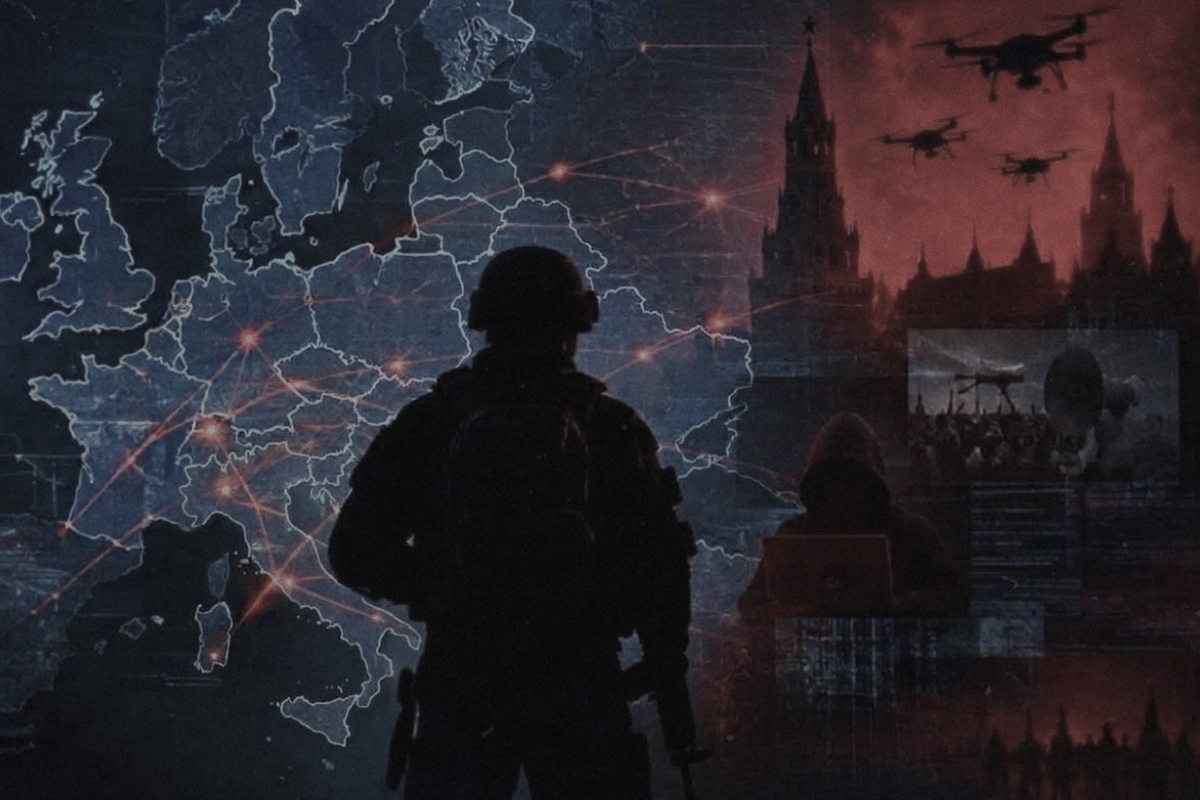
“We have no intention of attacking Europe,” vladimir putin stated once again at a recent meeting of the “valdai” club. At the same time, he warned that in case of a “strike against russia”, moscow could use “all available weapons”, including nuclear ones. Such rhetoric is part of a systemic campaign to intimidate European governments and societies. Its goal is to curb military support for Ukraine, weaken Europe’s willingness to strengthen its own defense capabilities, and instill fear of direct confrontation.
However, the kremlin’s statements should not be perceived as actual plans. Today, russia’s main objective on the European front is to undermine support for Ukraine while keeping its own level of risk as low as possible. To this end, moscow has far more effective tools than a direct invasion. We mean hybrid warfare: sabotage, cyberattacks, influence operations, disinformation, “accidental” drone visits, and espionage. According to the Foreign Intelligence Service of Ukraine, there are nearly four hundred russian intelligence officers in Europe. Their activities allow moscow to systemically test the limits of what is permissible, while trying to operate below the threshold which could trigger NATO’s collective response.
At the same time, it would be a mistake to assume that russia has ruled out the possibility of a direct military confrontation with Europe. On the contrary, moscow views this as one of the scenarios for military conflicts through 2045. Six of these scenarios are directly related to Northern Europe. Scenarios involving Poland and the Baltic states are also being actively developed. After all, the putin regime inherently needs an external enemy to justify its own policies, mobilize society, and maintain control over it.
Today, russia’s goal is to undermine European unity and discredit its security architecture. One possible tool is a controlled regional crisis on NATO’s eastern flank. According to russian assessments, the Baltic states are one of the most vulnerable links in European security. The scenario could involve creating a situation in which the Alliance would be forced to make decisions under conditions of uncertainty and time constraints. The goal is not to defeat NATO militarily, but to demonstrate its alleged inability to respond quickly and collectively defend its members.
It is a mistake to assume that the kremlin makes its plans without taking “public sentiment” into account. According to the ECFR, russians name the United Kingdom, France, Germany, Poland, Finland, and the Baltic states among their main unfriendly countries. At the same time, 61% of those surveyed believe it is time for negotiations, but 59% are convinced that if those negotiations fail, aggressive actions should be escalated.
Thus, the russian threat to Europe has long gone beyond the scope of a possible direct attack by moscow. russia is preparing for a long-term confrontation in which the Ukrainian and European fronts are intertwined. Hence, Europe must view Ukraine not as a peripheral element of its own security, but as its indispensable front line, based on the principle that the security of Ukraine and Europe are inseparable. Strengthening its own defense capabilities, reducing energy dependence, applying consistent economic pressure on russia, and – most importantly – supporting Ukraine are not separate political decisions but elements of a single grand strategy to deter a common enemy.